
In 2026, strong seo for law firms is not just about rankings. It is about whether a firm shows up at the exact moment someone needs help. When people need a personal injury lawyer, divorce attorney, criminal defense lawyer, or other urgent legal services, they usually search online first, compare several options quickly, and make judgments based on visibility, clarity, and trust. That is why law firm websites now play a central role in how firms attract and convert new matters.
The problem is that most law firms still approach legal marketing in disconnected pieces. They update a Google Business Profile, publish a few blogs, or add new pages, but they do not build a unified growth system. In competitive markets, scattered activity rarely produces steady client acquisition, stronger online visibility, or lasting search rankings. A firm needs a strategy that helps search engines understand its services, locations, authority, and relevance all at once.
This guide explains the 5 step seo strategy law firms should use to dominate search in 2026 in a straightforward way. The focus is informational, not theoretical. Each step is designed to help firms strengthen local seo, improve technical performance, publish more useful content, and build authority that supports long-term growth rather than short-term spikes.

Step 1: Build Law Firm Websites Around Search Intent and Client Needs
The first step in law firm seo is understanding search intent. A person searching for a car accident lawyer is often in a different emotional and decision-making stage than someone searching for a family law, a DUI attorney, or a divorce lawyer. Strong law firm websites reflect that difference in structure, language, and page purpose. Instead of forcing multiple services into generic pages, they create clear paths based on what people are actually trying to find.
That is why good keyword research matters so much. The goal is not to collect the biggest list of legal keywords possible. The goal is to identify relevant keywords tied to service demand, urgency, and location. When firms align target keywords with specific practice areas, they make the site easier for users to navigate and easier for search engines to interpret. This improves relevance before any technical enhancement or authority campaign begins.
Use Practice Area Pages to Match Client Search Behavior
A common weakness across law firms is relying on broad service pages that try to rank for everything at once. That usually waters down relevance and makes the law firm site less persuasive. A page targeting personal injury should not read like a page targeting divorce attorney searches, and a page for a criminal defense lawyer should not compete internally with general criminal law copy.
This is why expanding practice area pages is one of the most practical SEO moves a firm can make. Separate pages for specific services, case types, and local modifiers help support local search, improve search results, and create better user flow. They also make the content more useful, which aligns with Google’s guidance that pages should be created to help people rather than just to capture traffic.
Step 2: Improve Local SEO With Strong Google Business Profile Optimization
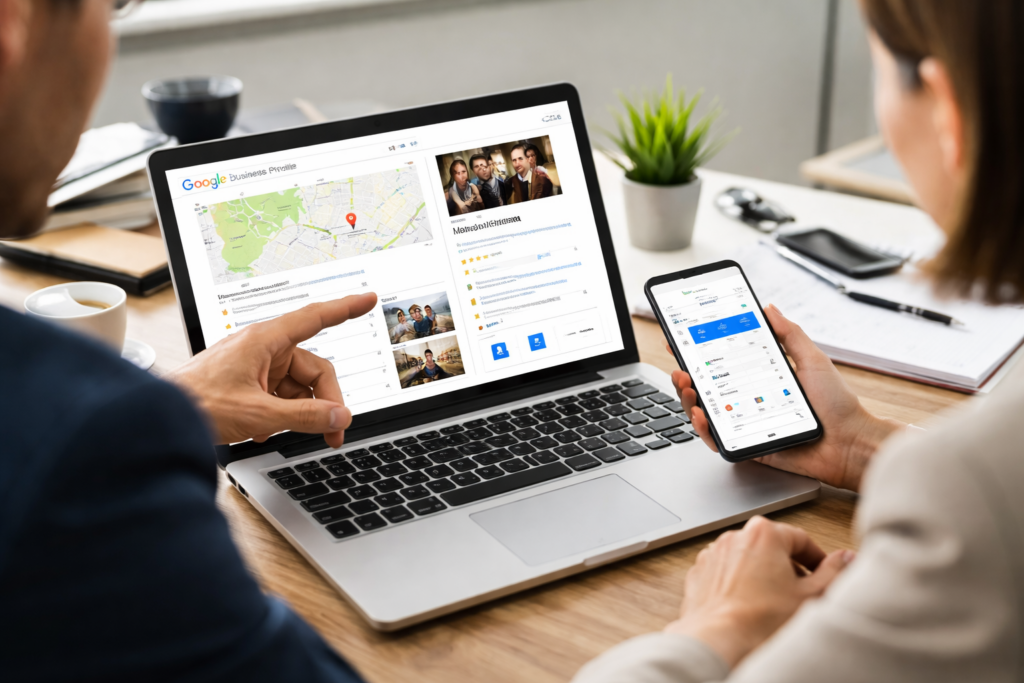
The second step is Google Business Profile optimization, because many firms win or lose first impressions before a visitor even reaches the website. A strong Google Business Profile can influence whether a firm appears in Google Maps, whether it shows up in local search results, and whether prospects see the firm as established and legitimate. For legal searches with local intent, that profile is often one of the first things a person evaluates.
Google’s own guidance makes this especially important. Business information should accurately represent the real business, the address or service area should be precise, and categories should describe the actual core service. Google also warns that duplicate or misleading profiles can create display issues or policy problems. For law firms, that means location accuracy, category discipline, and consistent information are essential parts of local optimization, not optional details.
Use Google Business Profile Insights to Understand Search Behavior
Many firms look at Google Business Profile insights but never use them strategically. That is a missed opportunity. Those insights can show whether people are finding the firm through branded searches, service-based searches, or geographic discovery. That helps reveal whether the firm is becoming visible for the terms that matter or only for people who already know the brand.
When firms combine Google Business Profile insights with Google Analytics, Google Search Console, and call tracking software, they gain a much clearer picture of which pages, services, and locations are producing real leads. That is where legal marketing becomes measurable. Instead of guessing what is working, the firm can compare keyword rankings, call patterns, and consultation trends against real SEO activity and make smarter decisions.
Add Local Trust Signals That Strengthen Search Results
Strong local seo goes beyond profile setup. It also includes local relevance signals that reinforce credibility in the area the firm serves. That can include consistent citations, location-specific content, neighborhood references when appropriate, and a visible embedded Google map on the contact or location page. These details help users trust the listing and help connect the site to the firm’s real service geography.
Off-site mentions can help too. When firms earn local news mentions, appear in respected community resources, or sponsor local events, they create additional trust signals around their brand. That kind of visibility can support search performance indirectly while also strengthening public familiarity. For firms competing in crowded local markets, those signals help distinguish the brand from others that rely only on generic website updates.
Step 3: Fix Technical SEO Before It Limits Growth
The third step is technical seo. Many firms invest in content and profiles but overlook the infrastructure that determines whether pages are fast, crawlable, and easy to trust. If a site has poor site speed, weak mobile optimization, confusing internal structure, or indexing problems, it becomes harder for users to stay engaged and harder for Google to evaluate the site efficiently.
This is where technical optimization becomes a business issue, not just a developer issue. A slow legal website can increase friction. A messy law firm site can dilute authority. Broken navigation, bloated templates, and unhelpful page architecture can reduce performance even when the content itself is strong. In legal SEO, technical weakness often hides behind the scenes while rankings stall and leads flatten.

Remove Broken Links, Indexing Clutter, and Duplicate Content
One of the most common technical problems on law firm websites is duplicate content. It often appears when firms build many city pages quickly, reuse service copy across locations, or clone articles without adding meaningful differences. That can weaken distinct relevance and make important pages feel thin. In the legal industry, where trust and precision matter, repetition can also hurt the user experience.
Another recurring issue is broken links and poor internal structure. If pages are disconnected, outdated, or hard to reach, both users and search engines lose context. Strategic internal links help distribute authority, connect related practice area pages, and guide readers from informational content toward conversion pages. Technical cleanup is often one of the fastest ways to improve usability and visibility at the same time.
Use Structured Signals So Search Engines Understand the Site
Technical SEO in 2026 also includes clearer content classification. Google explains that structured data helps it understand page content and may support richer appearances in search, although it does not guarantee them. Google also warns that structured data must match the visible content and should not be misleading. For law firms, that means schema should support clarity, not be used as decoration or manipulation.
That matters for service pages, article pages, and FAQs. When structured data reflects what is genuinely on the page, it helps search systems process the content more effectively. When it is inaccurate or disconnected from the visible information, it can become a liability. Clear structure, accurate markup, and clean page relationships all help search engines understand how the site is organized and what each page is meant to accomplish.
Step 4: Build a Content Strategy That Answers Real Legal Questions
The fourth step is content, but not random blogging. A strong content strategy for law firms in 2026 is built around actual legal queries, common fears, process questions, and the information people need before they call. The best legal content reduces uncertainty. It explains what happens next, what a person should know, and how a legal issue may affect decisions, timing, or expectations.
Google continues to emphasize helpful, reliable, people-first content, and that principle matters even more in the legal category. Law firms publishing shallow, repetitive content for rankings alone are less likely to build trust than firms that publish genuinely useful explanations tied to real user needs. This makes content quality a competitive advantage, especially when multiple firms target similar legal keywords in the same region.

Keep Content Focused on Service Relevance, Not Volume
Many firms still assume that more pages automatically means better performance. That is rarely true. A better approach is to create fewer, stronger pages that support the firm’s actual legal practices, reflect search behavior, and connect back to revenue-producing services. A useful page about personal injury, for example, should help a reader understand liability, evidence, deadlines, or next steps. A useful article about family law should answer real concerns, not just repeat definitions.
This also helps firms avoid wasting effort on traffic that never converts. Content should support potential clients’ search patterns, not just monthly publishing goals. When firms connect blog topics to service pages, local pages, and decision-stage questions, they create a much stronger path from discovery to contact.
Update Pages With Up-to-Date Information and Local Context
Freshness does not mean changing a date and calling it done. It means reviewing whether pages still reflect current terminology, local realities, and the questions people are asking now. In fast-moving digital environments, outdated content can weaken credibility. A site that shows up-to-date information feels more trustworthy than one that looks abandoned or generic.
Local context matters here, too. A stronger article often includes city-specific nuance, realistic examples, or references that make the content feel grounded in the firm’s service area. That kind of relevance helps the page compete in local search results while also improving reader confidence. For law firms, credibility is not built only through legal knowledge. It is built through useful, timely, locally relevant communication.
Step 5: Build Authority Through Reviews, Citations, and Trusted References
The fifth step is authority. Even strong pages and technically sound websites can struggle if the broader web offers few signs that the firm is credible. This is where legal directories , reviews, and trusted mentions still matter. They help reinforce brand legitimacy and provide additional validation around the firm’s name, services, and location.
A recent legal-marketing study from FindLaw examined 177 firms in a competitive legal market and found a measurable relationship between online directory profiles and search visibility performance. That does not mean directories alone drive rankings, but it does suggest they remain relevant when used as part of a broader SEO strategy. For firms that ignore them completely, that can become a competitive disadvantage.

Use a Disciplined Review Process and Credible Testimonials
Reviews remain one of the clearest trust signals in legal search. A strong review generation process helps firms collect feedback ethically, consistently, and in a way that supports both conversions and local visibility. Good reviews can influence whether a user clicks, whether they trust the firm’s reputation, and whether the firm looks active and responsive compared with nearby competitors.
The same applies to client testimonials on the site. They should feel credible, specific, and professionally presented. At the same time, firms must prioritize maintaining client confidentiality and avoid turning social proof into something careless or exaggerated. In legal marketing, authority grows faster when trust signals feel real, restrained, and consistent with professional standards.
Approach link building like reputation building, not a shortcut
Effective link building for legal professionals is less about quantity and more about source quality. Links from legal publications, respected local organizations, scholarship pages, community sites, and other reputable legal sources are more useful than random placements on weak sites. In other words, authority should look earned.
This is especially important as visibility evolves across Google and other search engines. Search systems are getting better at evaluating quality, source trust, and page usefulness. Firms that build authority through meaningful mentions, local relevance, and genuinely useful content are in a better position than those relying on artificial shortcuts or volume-based tactics.
The risks: why most law firms still struggle to dominate search
The reason most law firms fail to dominate search is not that SEO no longer works. It is that execution is inconsistent. The website may be decent, but the profile is weak. The profile may be strong, but the content is thin. The content may be improving, but the technical foundation is still leaking performance. Without a connected strategy, firms keep investing without building momentum.
Another risk is confusing visibility with qualified lead generation. A firm may rank for broad terms and still fail to attract the right cases. Or it may gain traffic from articles that never support consultation requests. That is why seo strategies must be tied to service relevance, local intent, and measurable lead outcomes, not just impression growth.

FAQ
How important is Google Business Profile optimization for local seo?
It is one of the most important parts of local seo. A well-managed Google Business Profile helps firms appear in Google Maps, influences local search results, and gives prospects an immediate sense of credibility. Google’s own guidance emphasizes accurate business representation, precise service-area details, and appropriate categories.
Do legal directories still matter for law firms in 2026?
Yes, when they are accurate, relevant, and part of a broader SEO strategy. Directory profiles can reinforce trust, expand brand visibility, and support discovery. They are not enough by themselves, but they still contribute to a stronger search presence when combined with a good website, reviews, and useful content.
Can content alone help a legal website dominate search?
Not usually. Content is powerful, but it works best when paired with technical health, strong local assets, and outside authority signals. Helpful content is a major advantage, but Google also evaluates page experience, relevance, and trust across the broader site and web ecosystem.
Conclusion
The firms that win search in 2026 will not be the ones doing the most activity. They will be the ones doing the right work in the right order. Strong law firm websites, focused practice area pages, disciplined local seo, clean technical foundations, and trustworthy authority signals all work together to create stronger online visibility and better client acquisition.
If your firm wants to improve search rankings, attract more qualified leads, and compete more effectively in local legal markets, the next step is simple: audit your structure, your Google Business Profile, your content, your authority signals, and your technical foundation. Then build the system deliberately. For firms that want outside guidance, ROI Society can help turn scattered SEO activity into a clearer, more scalable growth strategy.